SURFER

News

The latest news from the SURFER project.

project conference

Ivan Čorić presented research at PRES 2026

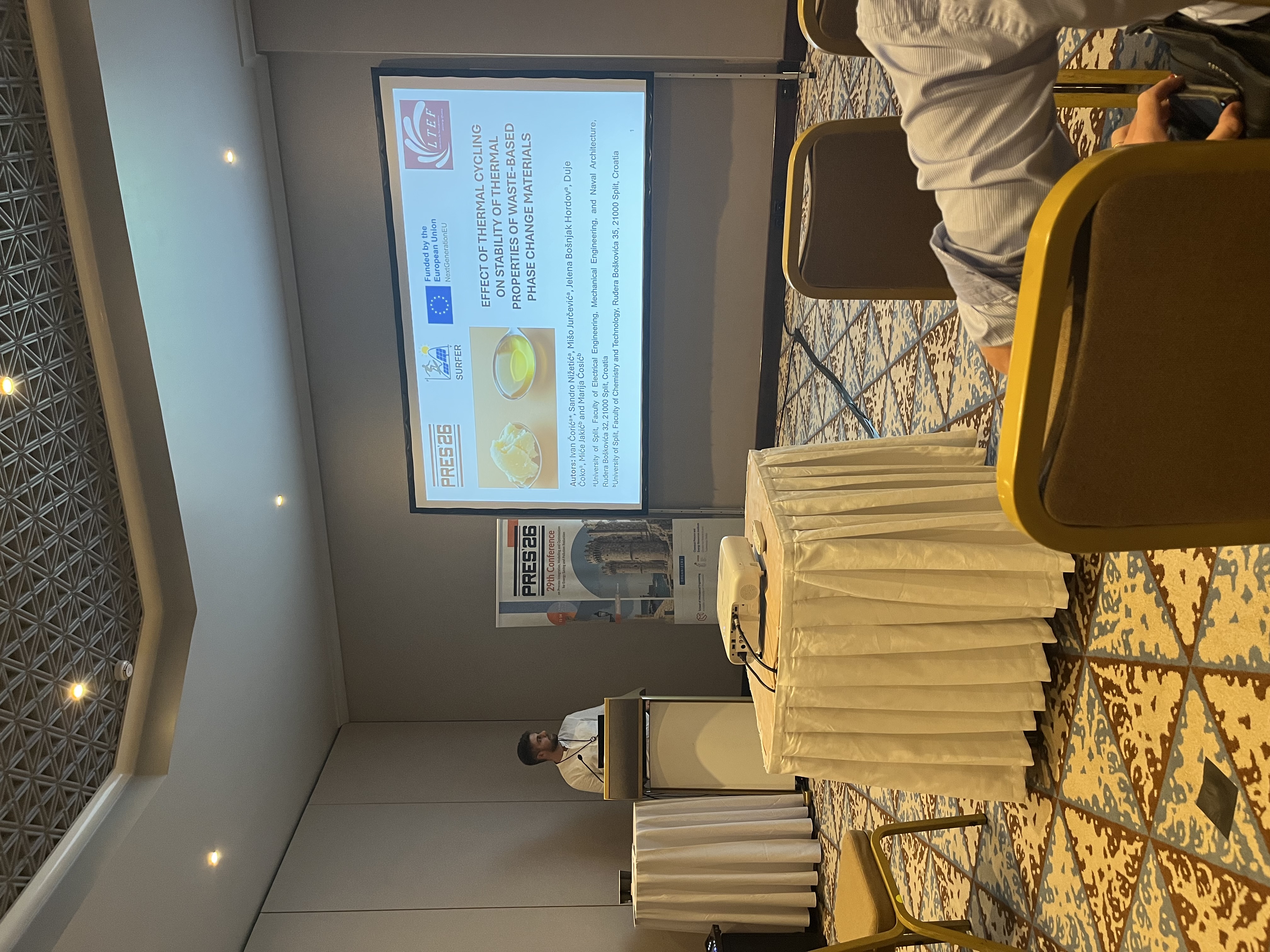
At the international PRES 2026 conference, held on 11–14 October 2026 in Rhodes, Greece, SURFER researcher Ivan Čorić presented the paper “Effect of thermal cycling on stability of thermal properties of waste-based phase change materials”. The paper was co-authored by Sandro Nižetić, Mišo Jurčević, Jelena Bošnjak Hordov, Duje Čoko, Miće Jakić and Marija Ćosić.

  • Research focus: The study explored the potential of waste-derived pork fat, filtered waste sunflower oil and their blends as thermal energy storage materials. Particular attention was given to whether their properties remained stable after repeated heating and cooling.
  • Measurements: Differential scanning calorimetry (DSC) was used to determine latent heat and characteristic phase transition temperatures. Thermal conductivity, thermal diffusivity and volumetric heat capacity were measured using the transient hot-wire method. Properties were compared before and after 100 melting and solidification cycles.
  • Results: Adding 2% and 8% sunflower oil by volume increased the initial latent heat of pork fat from 63.34 J/g to 70.24 and 69.57 J/g, respectively. After 100 cycles, the latent heat of both blends decreased by approximately 4%. Changes in the blends’ other thermal properties were relatively small.
  • Conclusion: The investigated waste-derived materials show potential for thermal energy storage, but their composition should be selected by considering both initial storage capacity and stability during repeated use. Further testing over more cycles is needed to assess long-term applicability. These findings contribute to SURFER research on materials for thermal energy storage and passive cooling.

Ivan Čorić at PRES 2026 title

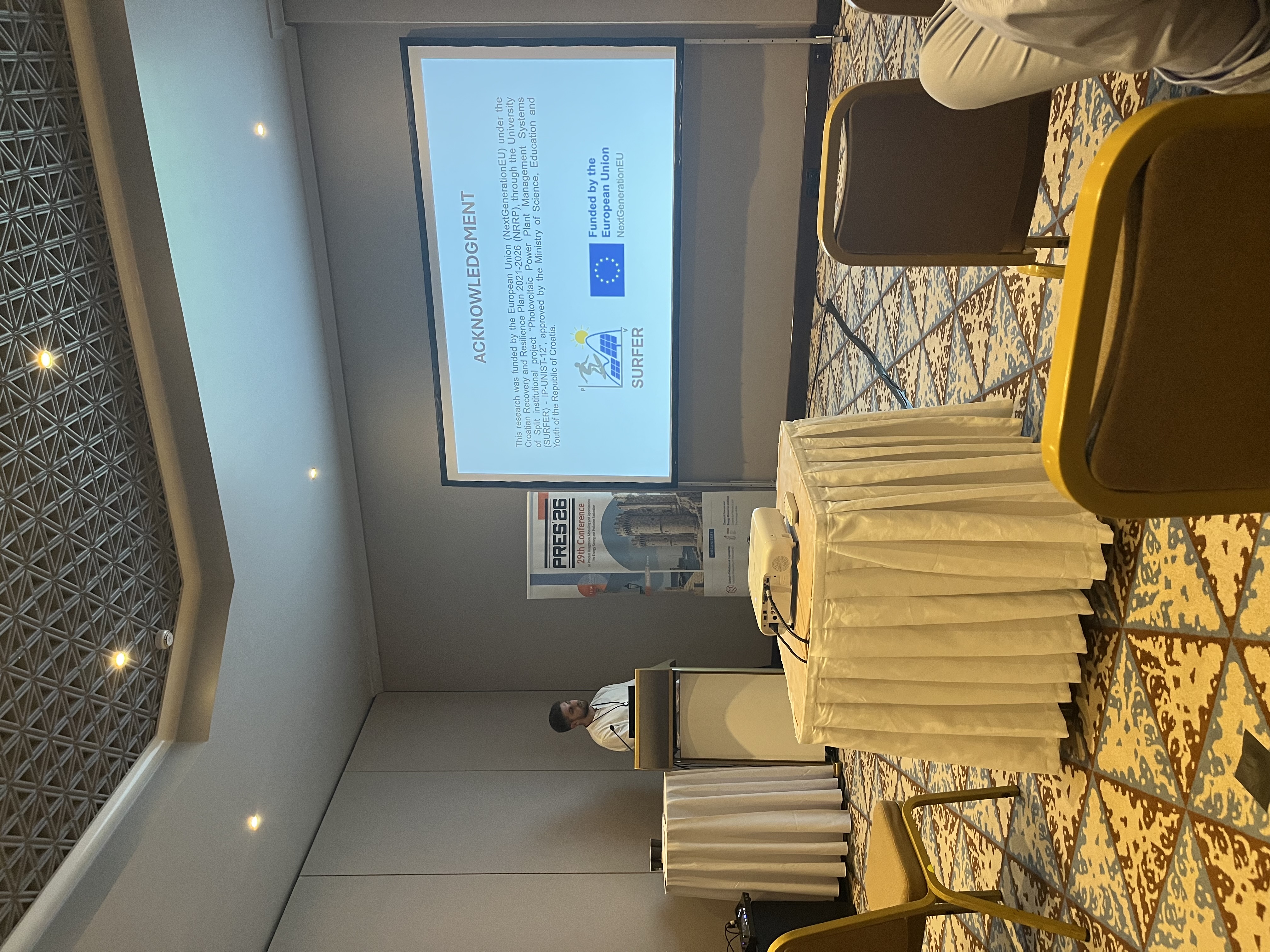
Ivan Čorić at PRES 2026 thanks

project conference

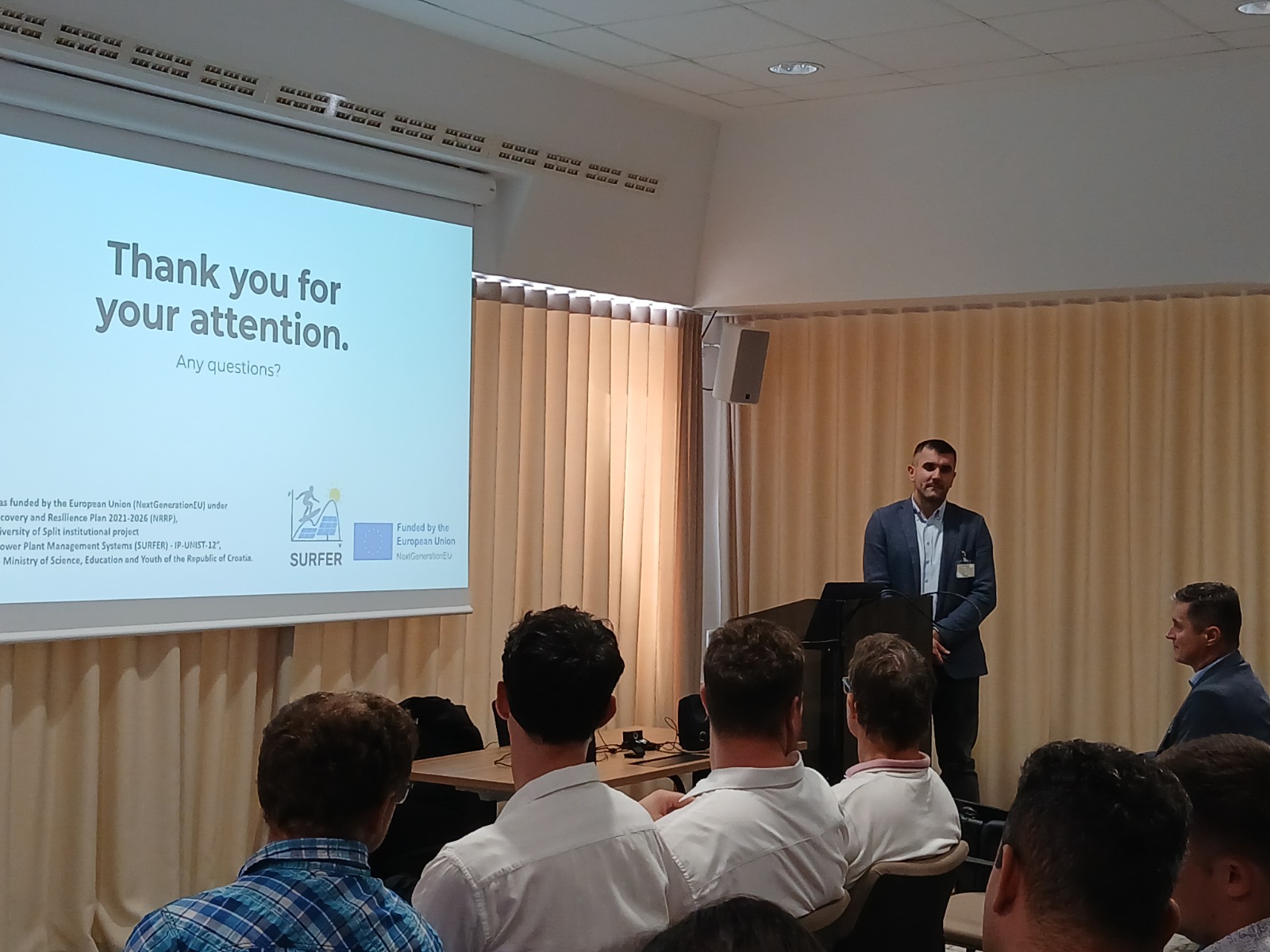
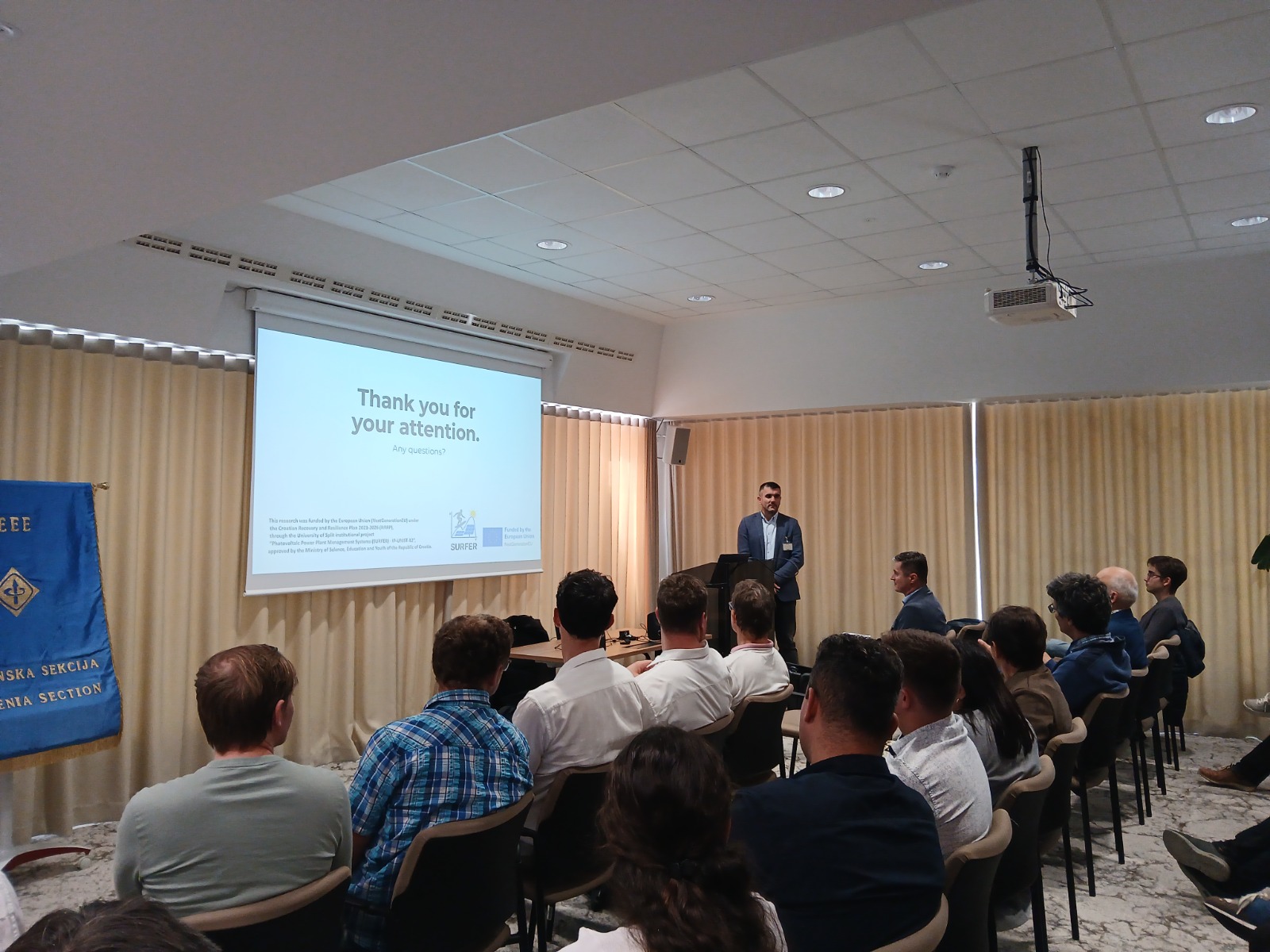
Ivan Grgić presented a paper at ERK 2026

On 25 September 2026, SURFER researcher Ivan Grgić presented the paper “Digital Zero-Sync Shoot-Through Injection for a Single-Phase Quasi-Z-Source Inverter” at the international ERK 2026 conference. The paper was co-authored with Dinko Vukadinović, Mateo Bašić and Luka Krišto.

  • Research focus: A fully digital Zero-Sync method was developed for controlling a single-phase quasi-Z-source inverter. The method precisely synchronises short intervals during which switches are turned on simultaneously, enabling the input voltage to be boosted.
  • Measurements: Capacitor voltages, output voltage, currents, harmonic distortion and efficiency were monitored on a laboratory prototype, together with the response to changes in load and the duration of these intervals.
  • Results and conclusions: Experimental tests confirmed that the developed algorithm operated correctly. Its implementation on the TI TMS320F280049C microcontroller uses the integrated Configurable Logic Block (CLB), eliminating the need for additional external logic and simplifying the control system design.

Ivan Grgić at ERK 2026 — title slide 1

Ivan Grgić at ERK 2026 — acknowledgements slide 1

project equipment

Camera system acquired for image-based monitoring of photovoltaic modules

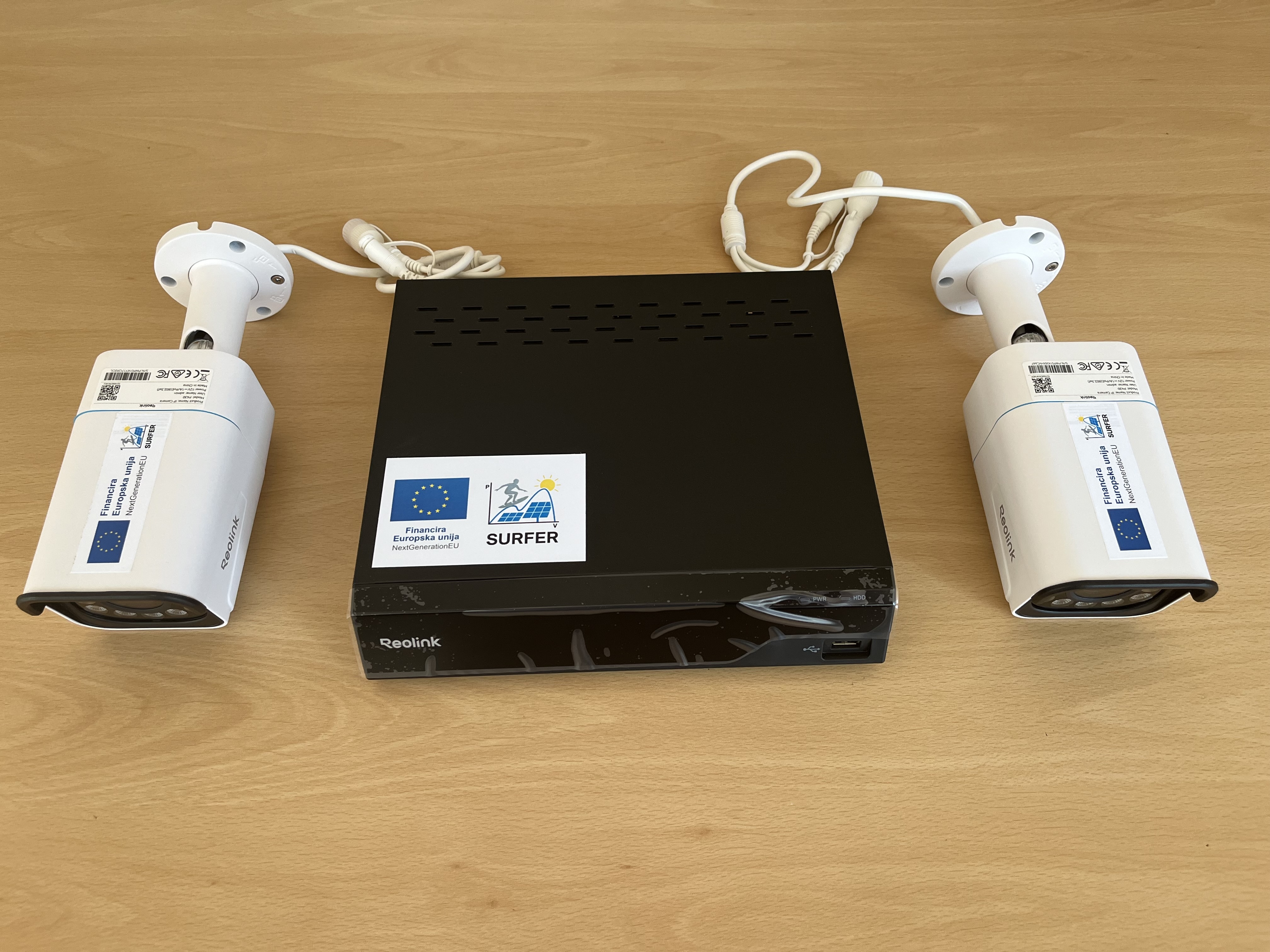
The SURFER – Systems for Managing the Operation of Photovoltaic Power Plants project has acquired a Reolink system comprising two P430 cameras with spotlights and an NVS8 network video recorder. The equipment will be used to collect images of photovoltaic modules and prepare a dataset for machine learning research.

  • Purpose: The cameras enable visual monitoring of photovoltaic module surfaces and documentation of visible changes, such as soiling, shading or possible damage.
  • Capabilities: Two cameras allow different parts of the setup to be recorded or modules to be viewed from different angles. The integrated spotlights also provide an opportunity to investigate how illumination affects the quality of the collected images.
  • Role in the project: Camera positions, recording conditions and image storage options will be investigated to ensure that the collected data are suitable for developing models to recognise and classify photovoltaic module conditions.
  • Purpose: The recorder enables video from connected cameras to be stored centrally and reviewed later.
  • Capabilities: Centralised recording makes it easier to track changes over time and select material for further processing and analysis.
  • Role in the project: It will form part of the image data acquisition infrastructure. Options for linking recording to specified conditions and external triggers will be investigated.

Supporting the development of machine learning methods

The collected images will be used to develop a project-specific dataset, including the selection, annotation and preparation of examples for training, validating and testing neural network models. Particular attention will be paid to changes in illumination, viewing angle and other factors that can affect recognition reliability.

The system will provide image data to complement electrical and environmental measurements from the project setup. This will support research into image-based monitoring and diagnostic methods for photovoltaic systems.

The equipment carries the required project visibility labels. The next steps are camera installation and testing of recording and data storage options.

Reolink NVS8 network video recorder with SURFER project visibility labels

project conference

Tea Erceg presented a paper at SoftCOM 2026

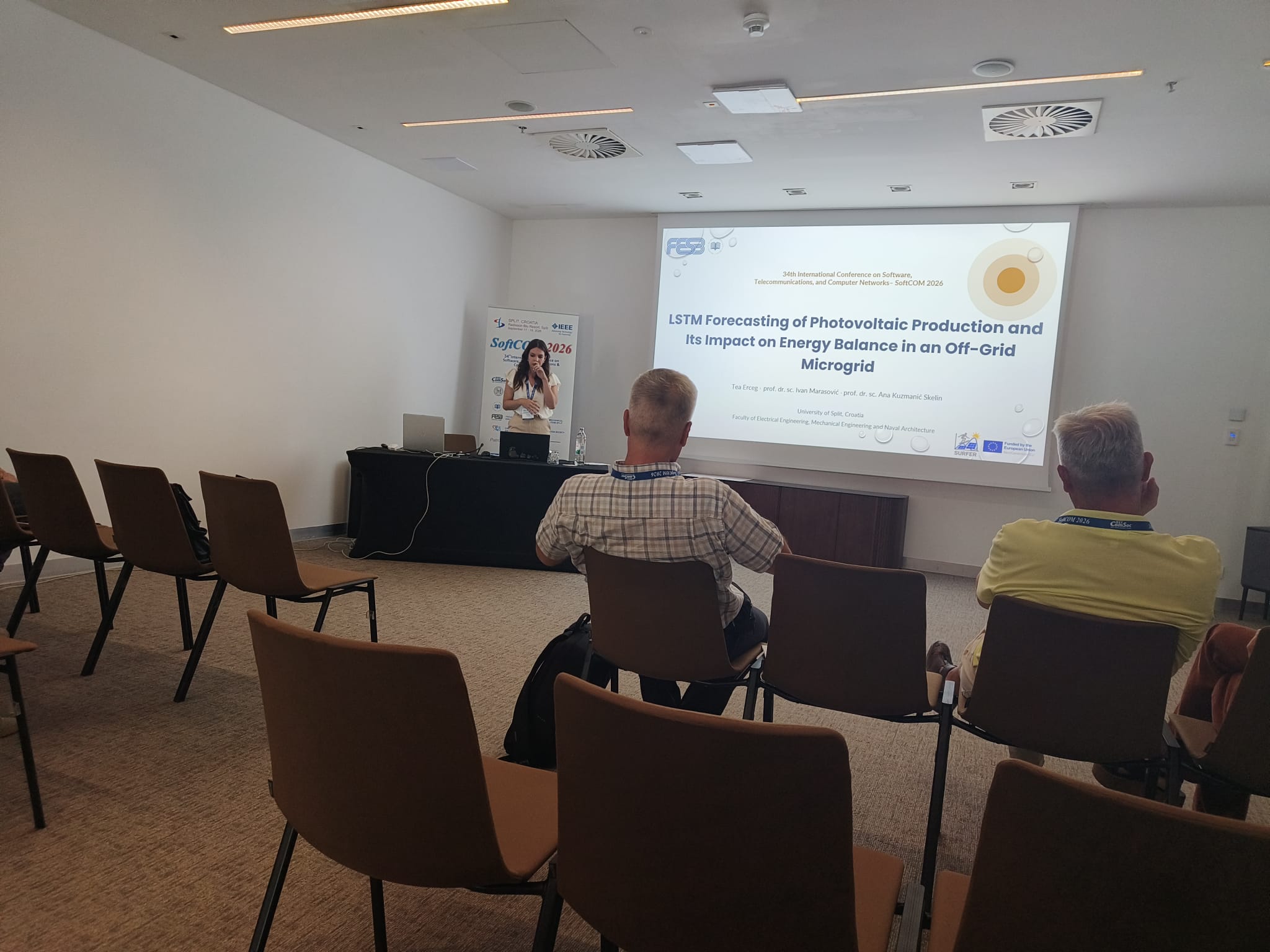
On 17 September 2026, SURFER researcher Tea Erceg presented the paper “LSTM Forecasting of Photovoltaic Production and its Impact on Energy Balance in an Off-Grid Microgrid” at the international SoftCOM 2026 conference. The paper was co-authored with Ivan Marasović and Ana Kuzmanić Skelin.

  • Research focus: An LSTM neural network model was developed to forecast photovoltaic generation 30 minutes ahead. The effect of the forecast on estimating energy surpluses or deficits in an off-grid microgrid was also investigated.
  • Data analysed: The study used a publicly available measurement dataset from a microgrid on Réunion Island, covering approximately eight months of solar irradiance, weather conditions, generation from two photovoltaic strings and household consumption.
  • Results: Compared with a simple forecast that assumes generation remains unchanged, the developed model reduced RMSE by approximately 44–45%. The proportion of incorrect estimates of energy surplus or deficit fell from 12.41% to 8.58%.
  • Conclusion: More accurate forecasts can support more reliable operational planning for off-grid photovoltaic systems. The results apply to the microgrid and period analysed; further testing is needed for wider application.

Tea Erceg at SoftCOM 2026 — title slide

project equipment

Additional computing equipment for project research

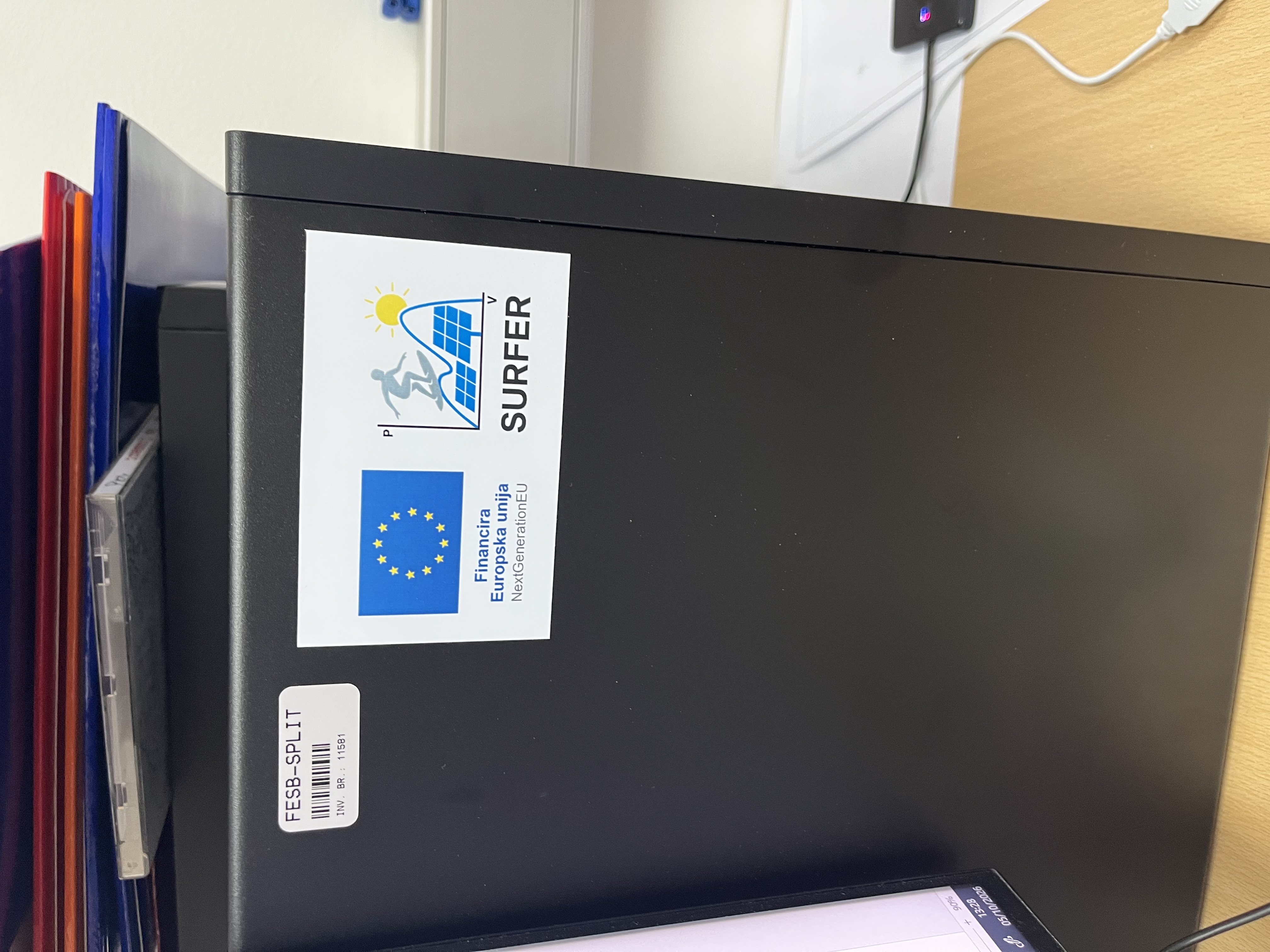
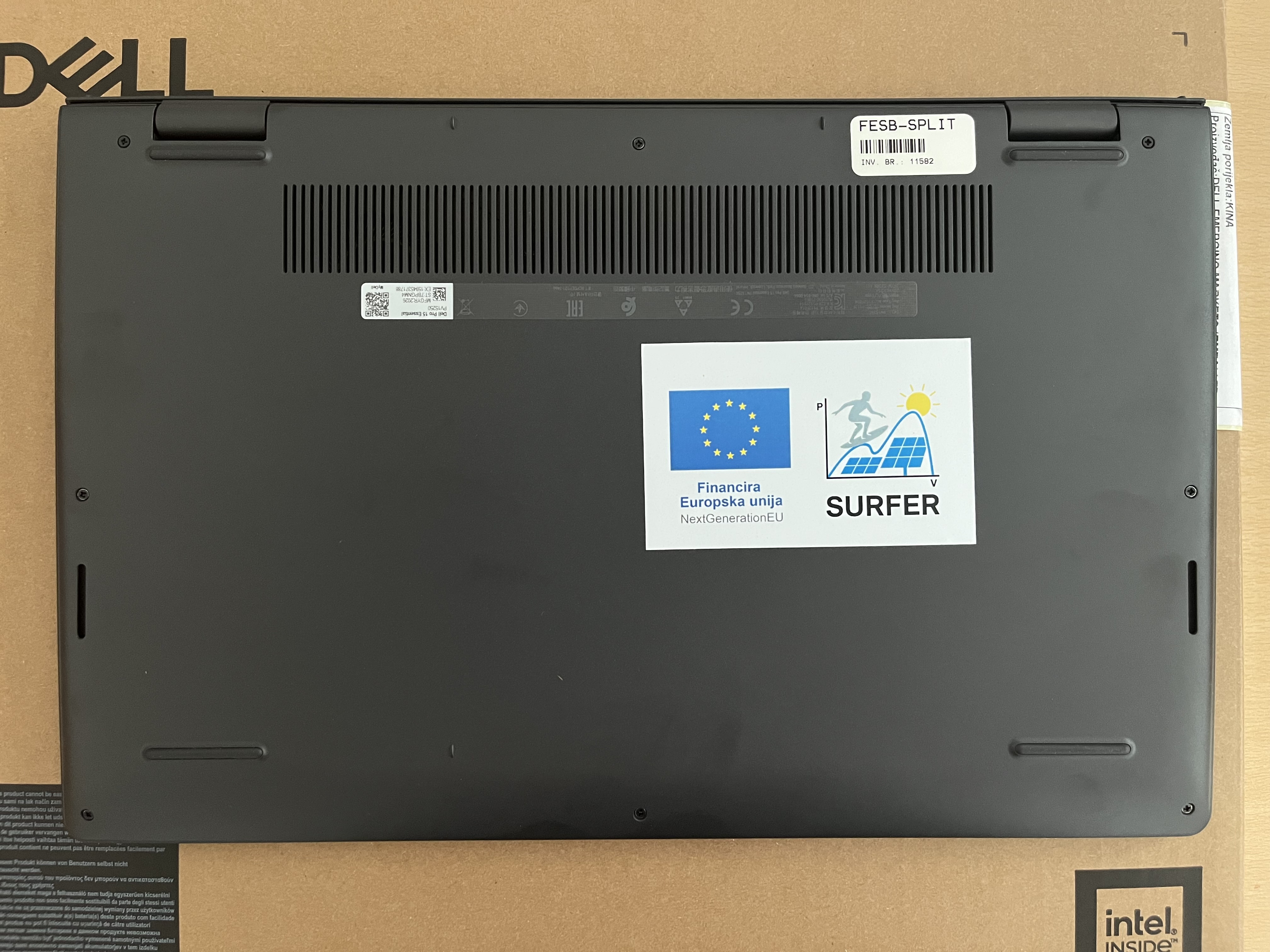
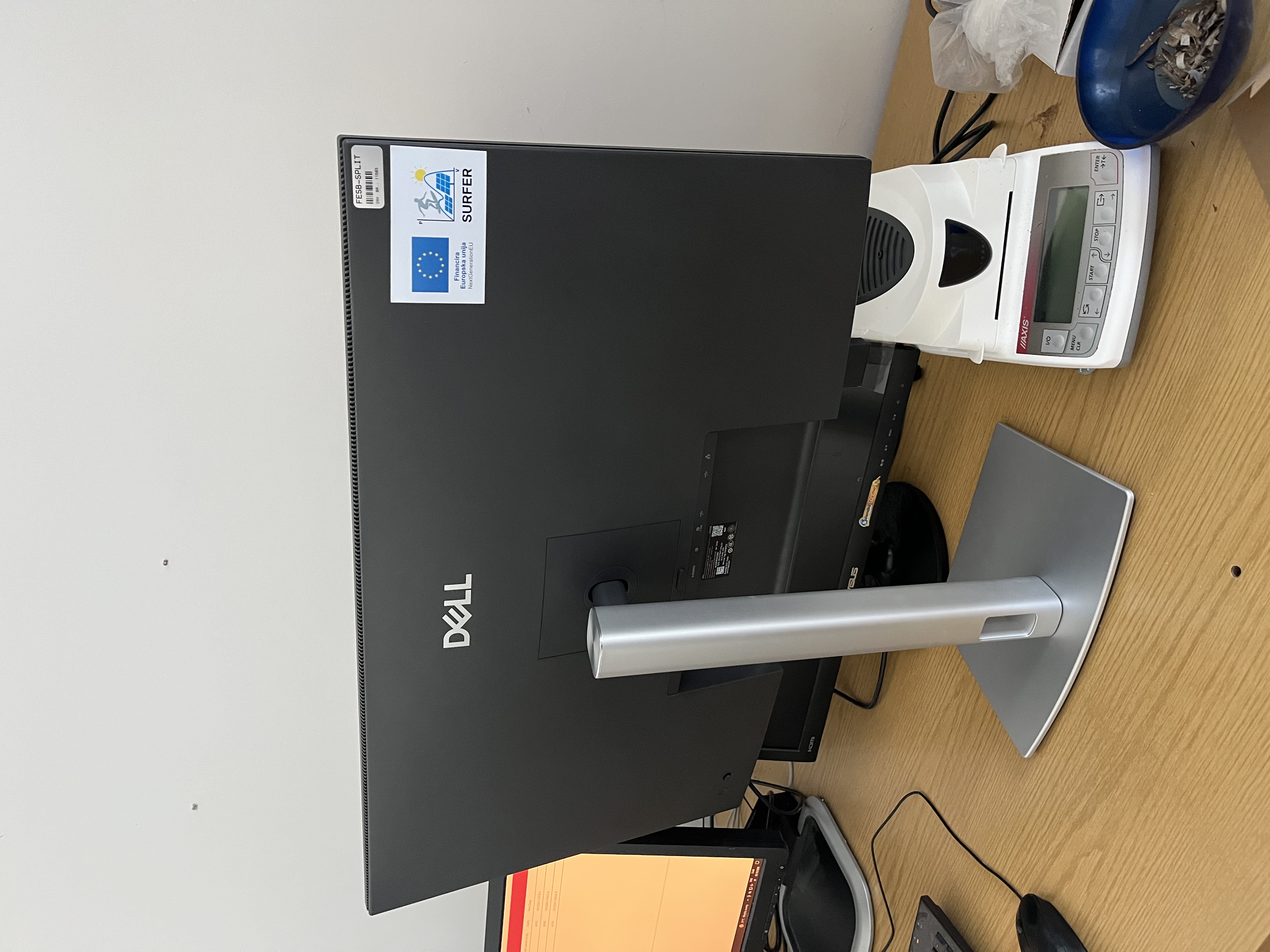
Additional computing equipment has been delivered for the SURFER – Systems for Managing the Operation of Photovoltaic Power Plants project: one desktop computer, one laptop and one monitor.

  • Purpose: The equipment supports day-to-day research, software development, and the processing and visualisation of experimental data.
  • Capabilities: The desktop computer and monitor support work with measurement data and research tools, while the laptop enables work alongside different laboratory and field setups.
  • Role in the project: The equipment will support data collection and analysis, experiment preparation, and the documentation and presentation of photovoltaic systems research results.

The equipment was delivered on 16 September 2026 and carries the required project visibility labels.

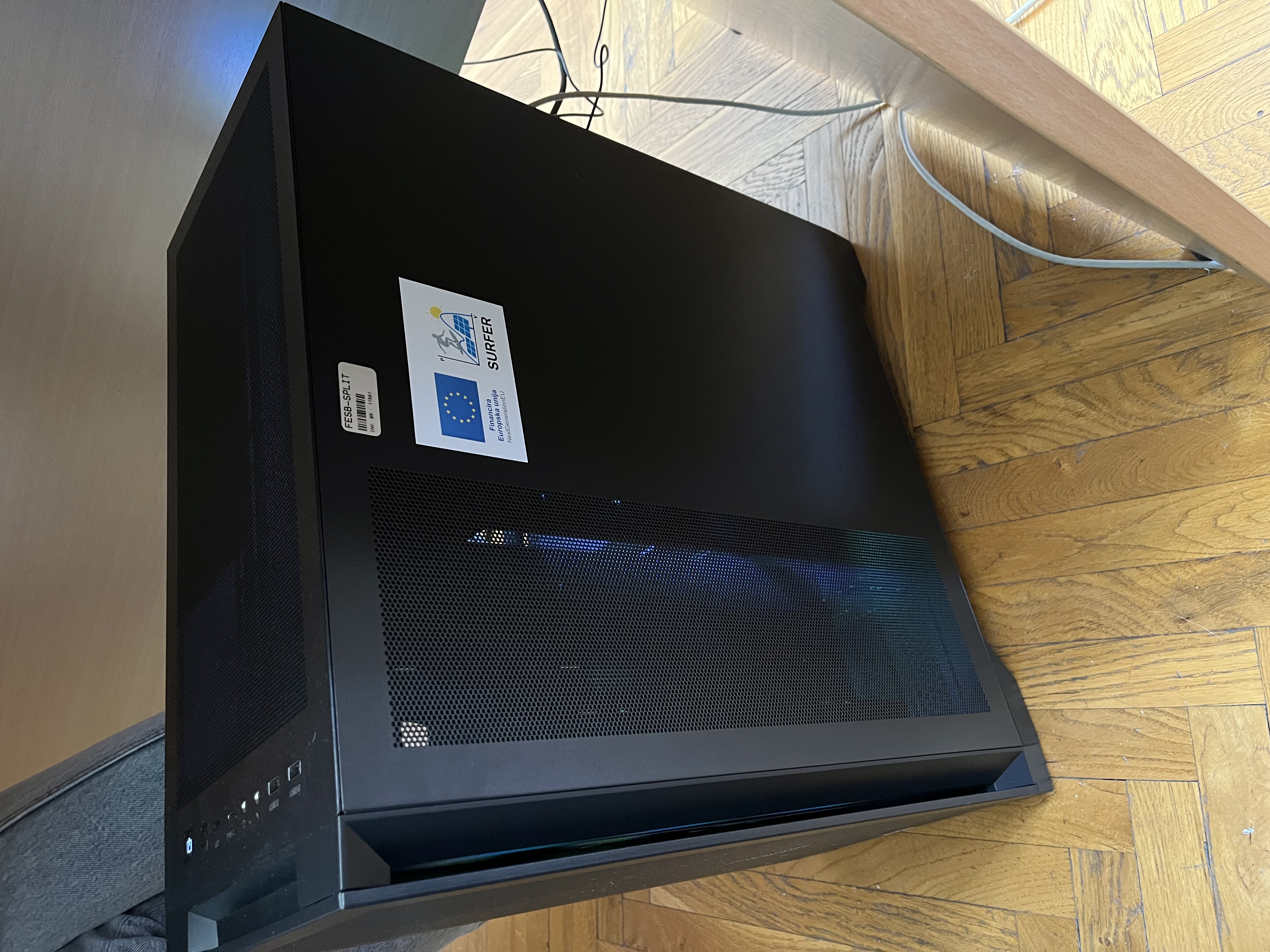
Desktop computer with SURFER project visibility labels

Laptop with SURFER project visibility labels

Monitor with SURFER project visibility labels

project equipment

Workstations acquired for converter control and machine learning

Two workstations have been delivered for the SURFER – Systems for Managing the Operation of Photovoltaic Power Plants project to support the development of power converter control algorithms and research into machine learning methods.

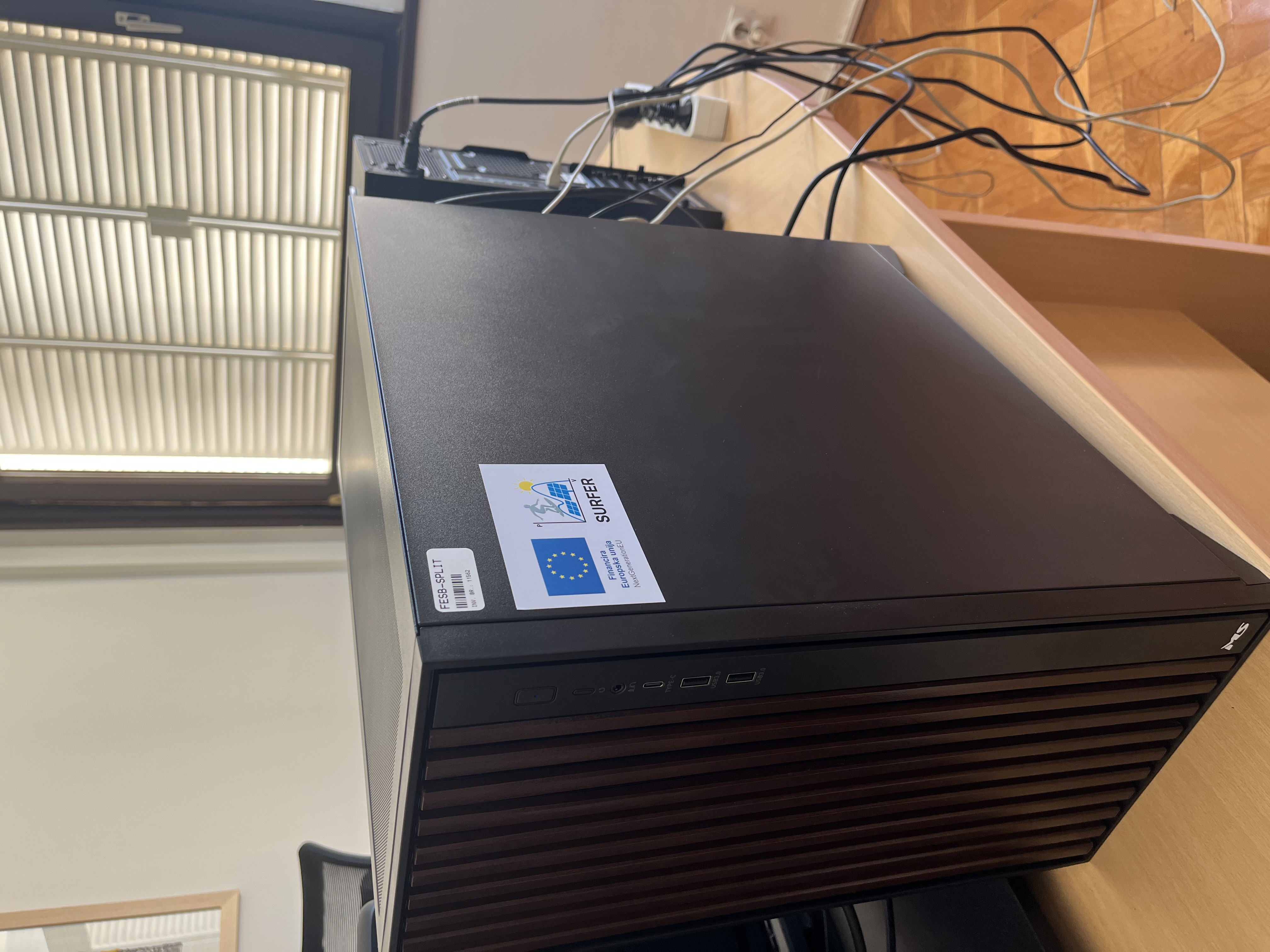
Workstation for power converter research

  • Purpose: The KEEA research group’s workstation is intended for modelling and simulating power converters and processing experimental data.
  • Capabilities: It provides computing resources for developing and comparing control algorithms, analysing electrical quantities and preparing experiments.
  • Role in the project: It will support research into converters connecting photovoltaic sources and energy storage systems, and the development of methods for more efficient control of their operation.

Workstation for power converter research with SURFER project labels

Workstation for machine learning

  • Purpose: The workstation, equipped with an AMD Ryzen 7 9800X3D processor and an NVIDIA RTX PRO 4500 Blackwell graphics card, is intended for developing neural network models to analyse images of photovoltaic modules.
  • Capabilities: The graphics processor accelerates model training, validation and testing, as well as the processing of image datasets.
  • Role in the project: It will support research into recognising and classifying photovoltaic module conditions, using publicly available datasets and a project-specific image dataset that the team plans to develop.

A software environment has been configured on the machine learning workstation, including Ubuntu 24.04 through Windows Subsystem for Linux, NVIDIA CUDA, cuDNN and a GPU-enabled version of PyTorch. GPU availability for running models has been verified, preparing the workstation for neural network training.

Machine learning workstation with SURFER project labels

The workstations were delivered on 3 September 2026 and carry the required project visibility labels.

project equipment

Supercapacitors acquired for hybrid energy storage research

The SURFER – Systems for Managing the Operation of Photovoltaic Power Plants project has acquired supercapacitors for research into energy storage systems and power converter control.

Rapid energy storage and delivery

  • Purpose: Supercapacitors store electrical energy and enable it to be absorbed and delivered rapidly. They are particularly suitable for short-term power variations and sudden changes in load.
  • Capabilities: Compared with batteries, supercapacitors generally store less energy, but can respond rapidly to system demands and withstand a large number of charging and discharging cycles.
  • Role in the project: They will be used to investigate hybrid energy storage, in which batteries and supercapacitors perform different roles: batteries provide a longer-term energy supply, while supercapacitors meet short-term power demands.

Integration with photovoltaic sources and power converters

The planned research includes connecting supercapacitors to laboratory power converters and adapting control algorithms for the coordinated operation of a photovoltaic source and a hybrid energy storage system.

Voltages, currents and energy flows will be monitored as generation and consumption change. The research will examine whether appropriate power sharing between batteries and supercapacitors can reduce sudden current demands on batteries and improve the system’s dynamic response.

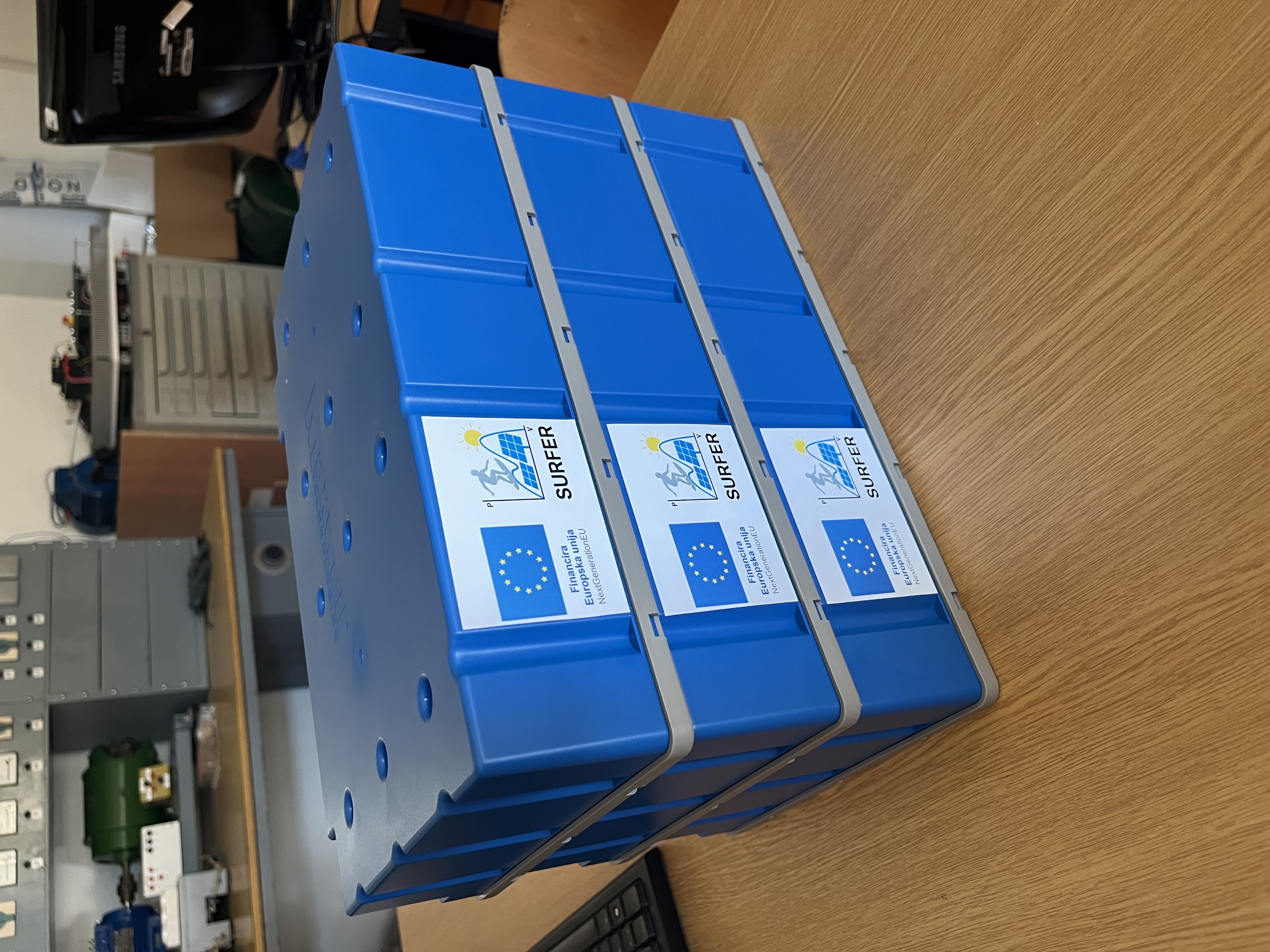
The equipment expands the scope for experimental validation of advanced control methods for off-grid photovoltaic systems. The supercapacitors carry the required project visibility labels. Supercapacitors with SURFER project visibility labels

project equipment

New equipment for developing power converter control

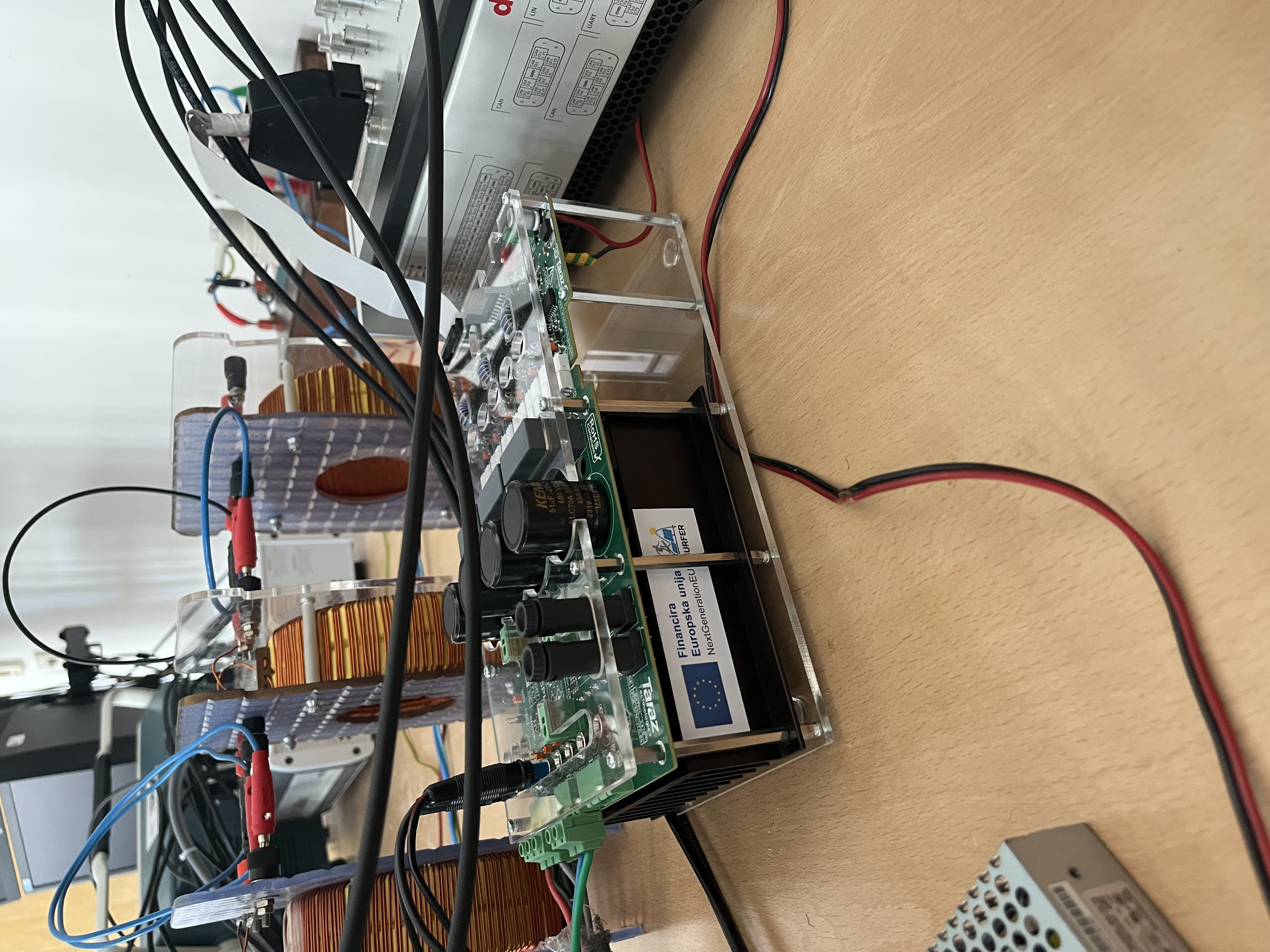
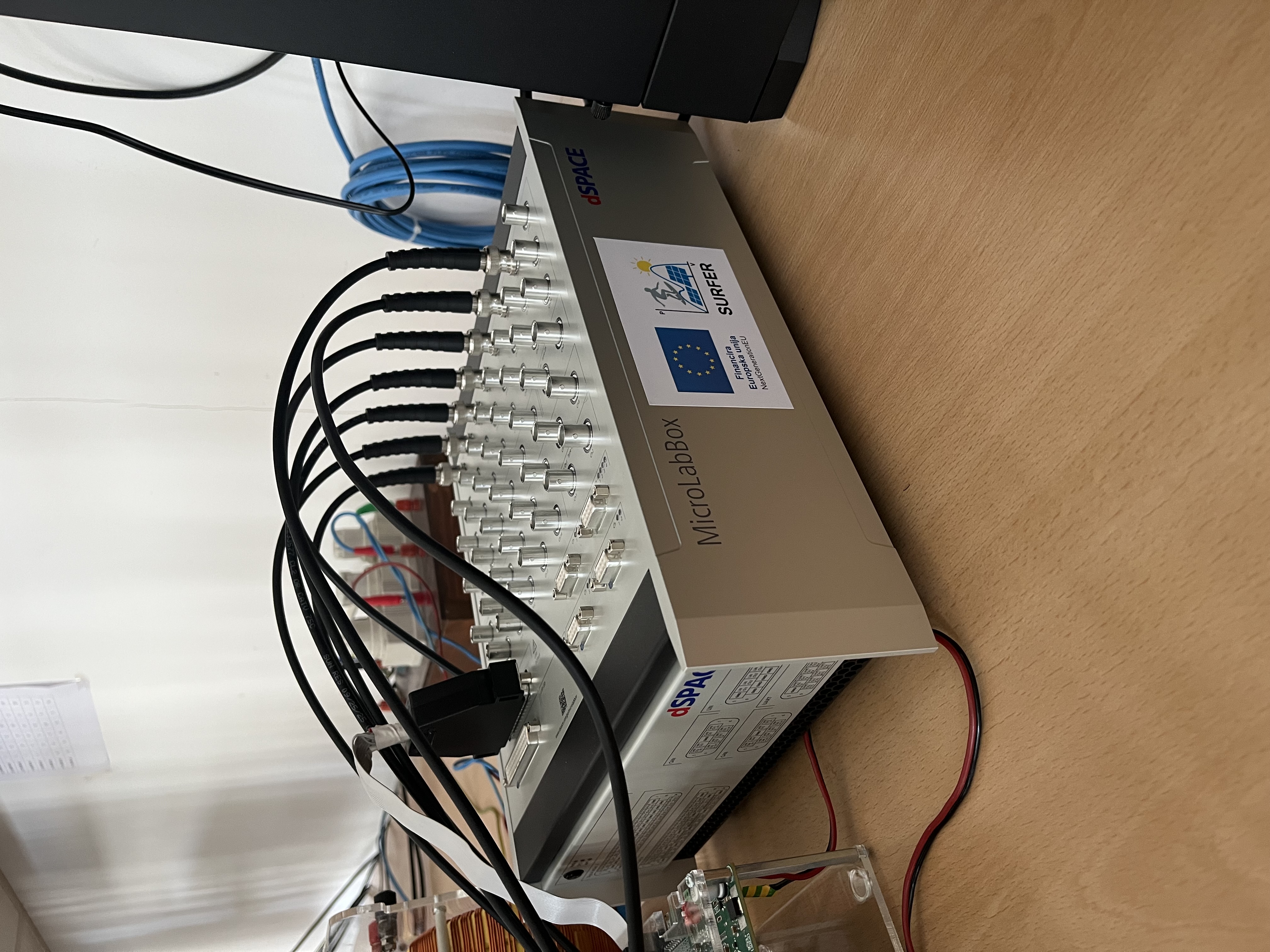
The SURFER project has acquired a dSPACE MicroLabBox II, a system for rapid prototyping and real-time execution of control algorithms.

  • Purpose: It enables control algorithms developed in MATLAB/Simulink to be connected to physical laboratory converters, sensors and measurement devices.
  • Capabilities: The system includes a real-time processor, a programmable FPGA and more than 100 analogue and digital input/output channels. This enables new control methods to be tested and their effects on converter operation to be monitored.
  • Role in the project: It will be used to develop and experimentally validate control methods for power converters connecting photovoltaic sources and energy storage systems, with the aim of improving efficiency and power quality.

The equipment carries the project visibility labels.

dSPACE MicroLabBox II with SURFER project visibility labels

project equipment

New photovoltaic equipment for a modular research system

The SURFER – Systems for Managing the Operation of Photovoltaic Power Plants project has acquired equipment for building a modular photovoltaic research system. The system will enable photovoltaic modules, charge controllers, battery storage units and inverters to be connected in different configurations tailored to individual experiments.

The equipment comprises six bifacial photovoltaic modules, two Victron Energy Pure Sinewave 24/1200 inverters, two Victron Energy SmartSolar MPPT 150/45 charge controllers with Bluetooth connectivity, and four Victron Energy AGM 12 V, 110 Ah batteries.

Bifacial photovoltaic modules
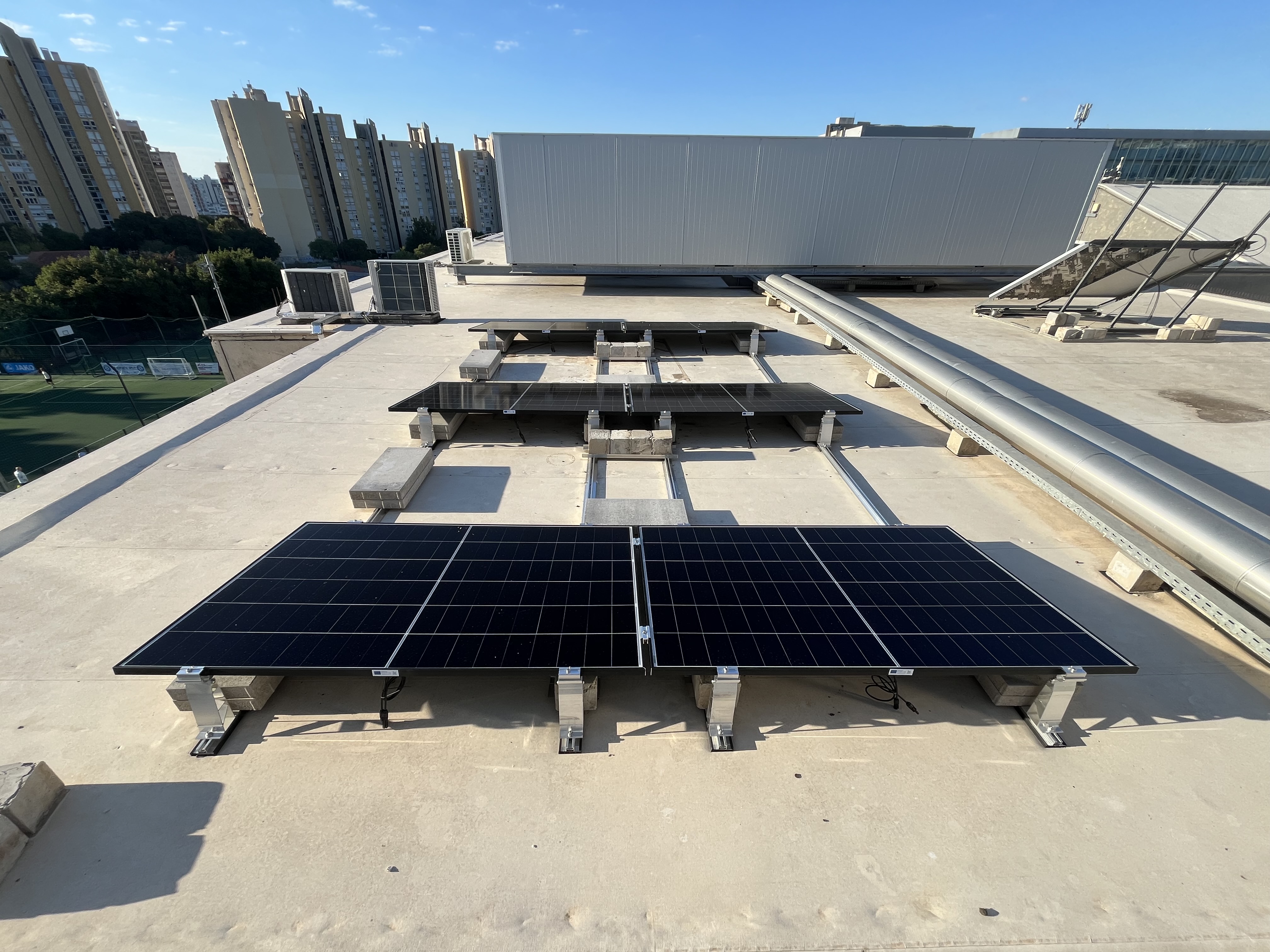
Bifacial photovoltaic modules installed on the FESB roof

  • Purpose: Photovoltaic modules convert solar energy into electrical energy. Their bifacial design allows them to use irradiance reaching both the front and rear surfaces, including light reflected from surrounding surfaces.
  • Capabilities: The six modules provide a platform for investigating how positioning, shading, soiling, temperature and environmental conditions affect electricity generation. The contribution from the rear surface will depend on how the modules are installed and the properties of surrounding surfaces.
  • Role in the project: The modules have been installed on the roof of the FESB building, where they will serve as experimental infrastructure for measurements and the development of photovoltaic system monitoring methods.

Victron Energy Pure Sinewave 24/1200 inverters
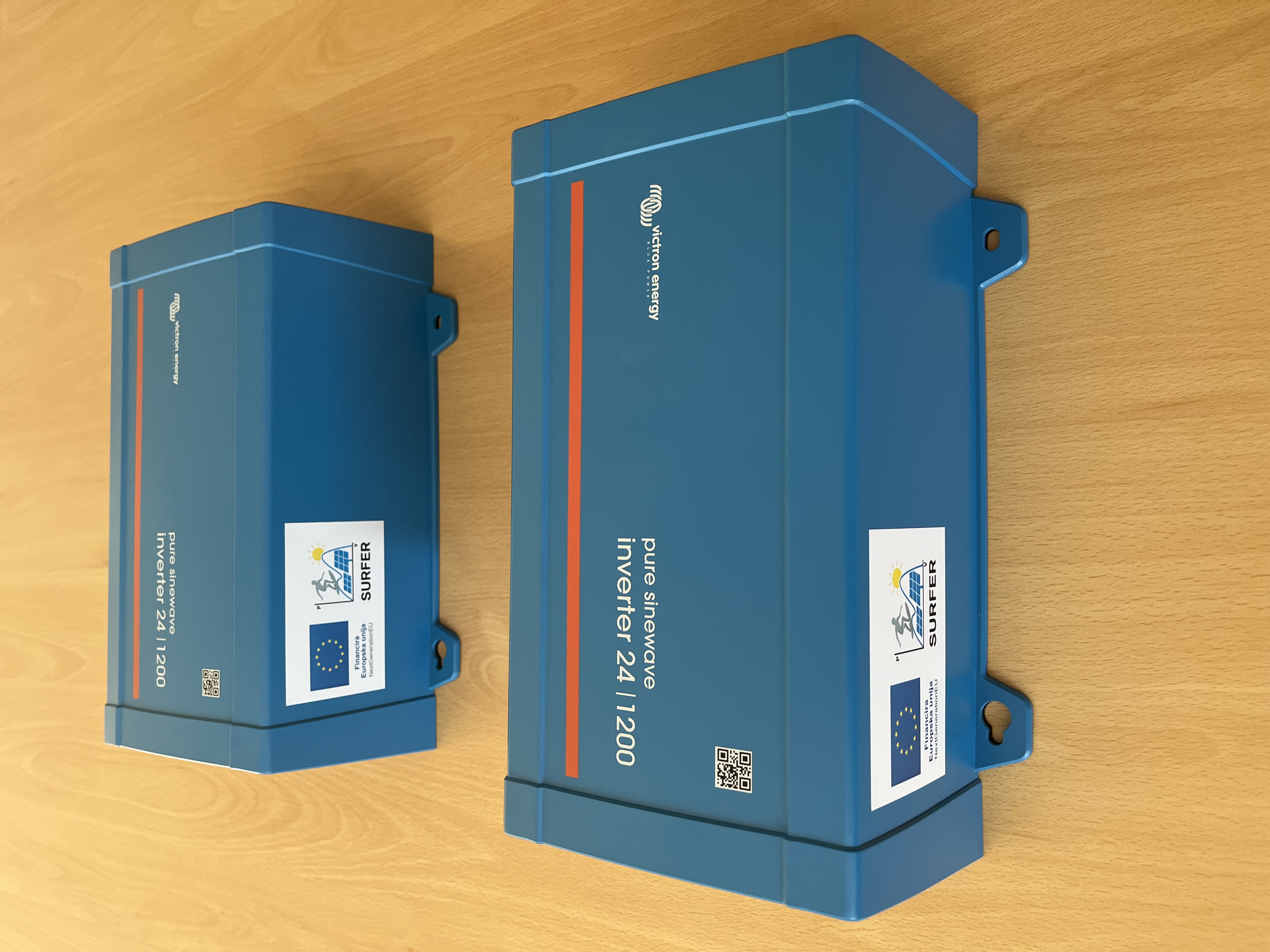
Victron Energy Pure Sinewave 24/1200 inverters

  • Purpose: The two inverters convert DC energy from a battery system with a nominal voltage of 24 V into AC energy to supply suitable loads.
  • Capabilities: Their sinusoidal output voltage enables research into supplying AC loads in an off-grid system that operates independently of the public electricity grid.
  • Role in the project: They will be used to investigate energy flows from the photovoltaic source and battery storage to consumers, and to analyse system behaviour under different loads.

Victron Energy SmartSolar MPPT 150/45 charge controllers
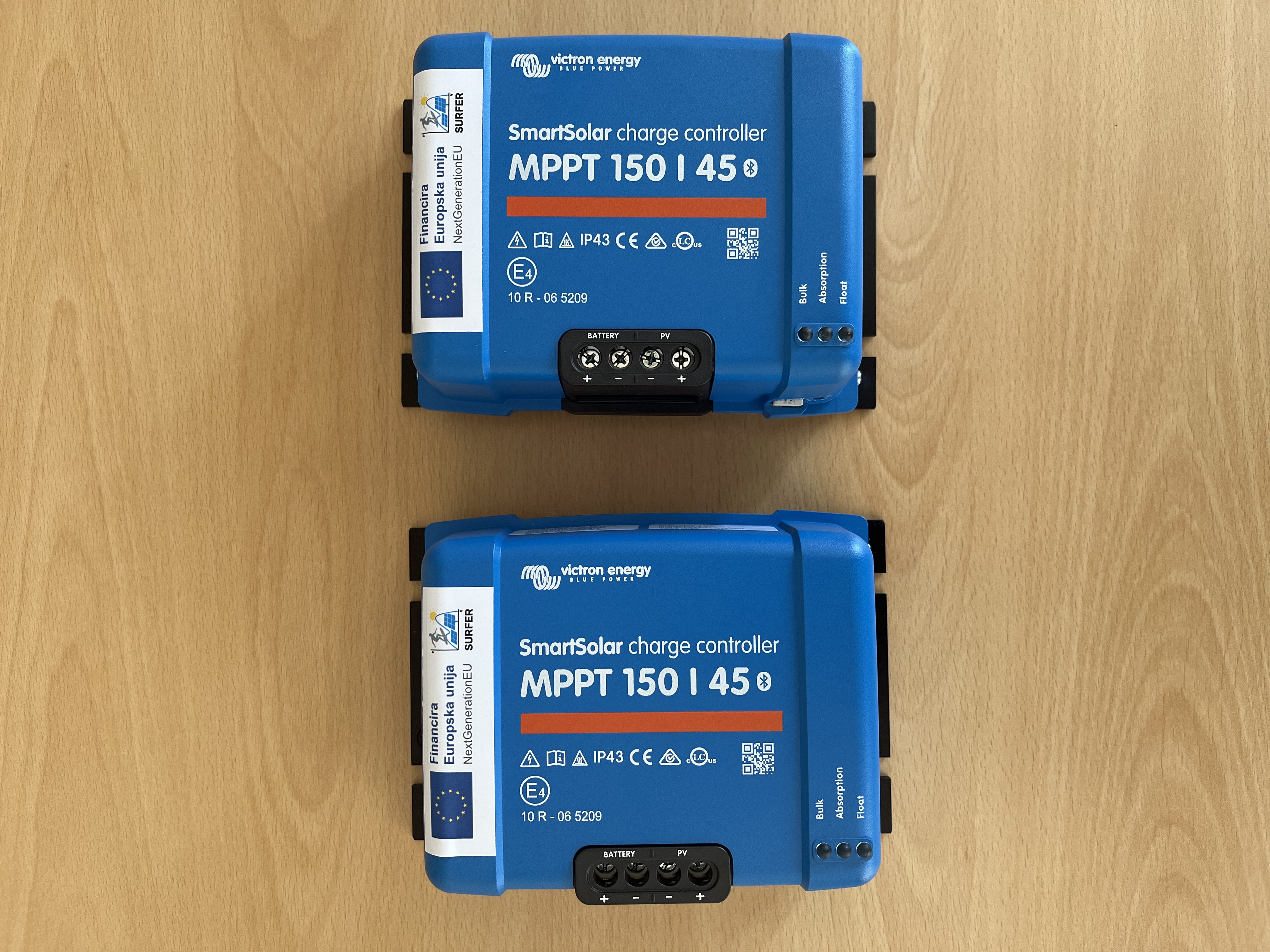
Victron Energy SmartSolar MPPT 150/45 charge controllers

  • Purpose: The two controllers manage energy transfer from the photovoltaic modules to the batteries. The maximum power point tracking (MPPT) algorithm tracks the operating point at which the modules can deliver the greatest available power.
  • Capabilities: The controllers adapt the operation of the photovoltaic source to changes in irradiance and other conditions. Bluetooth connectivity makes configuration and access to available operating data easier.
  • Role in the project: They will enable monitoring of generation and battery charging, and comparison of different photovoltaic system configurations.

Victron Energy AGM 12 V, 110 Ah battery storage
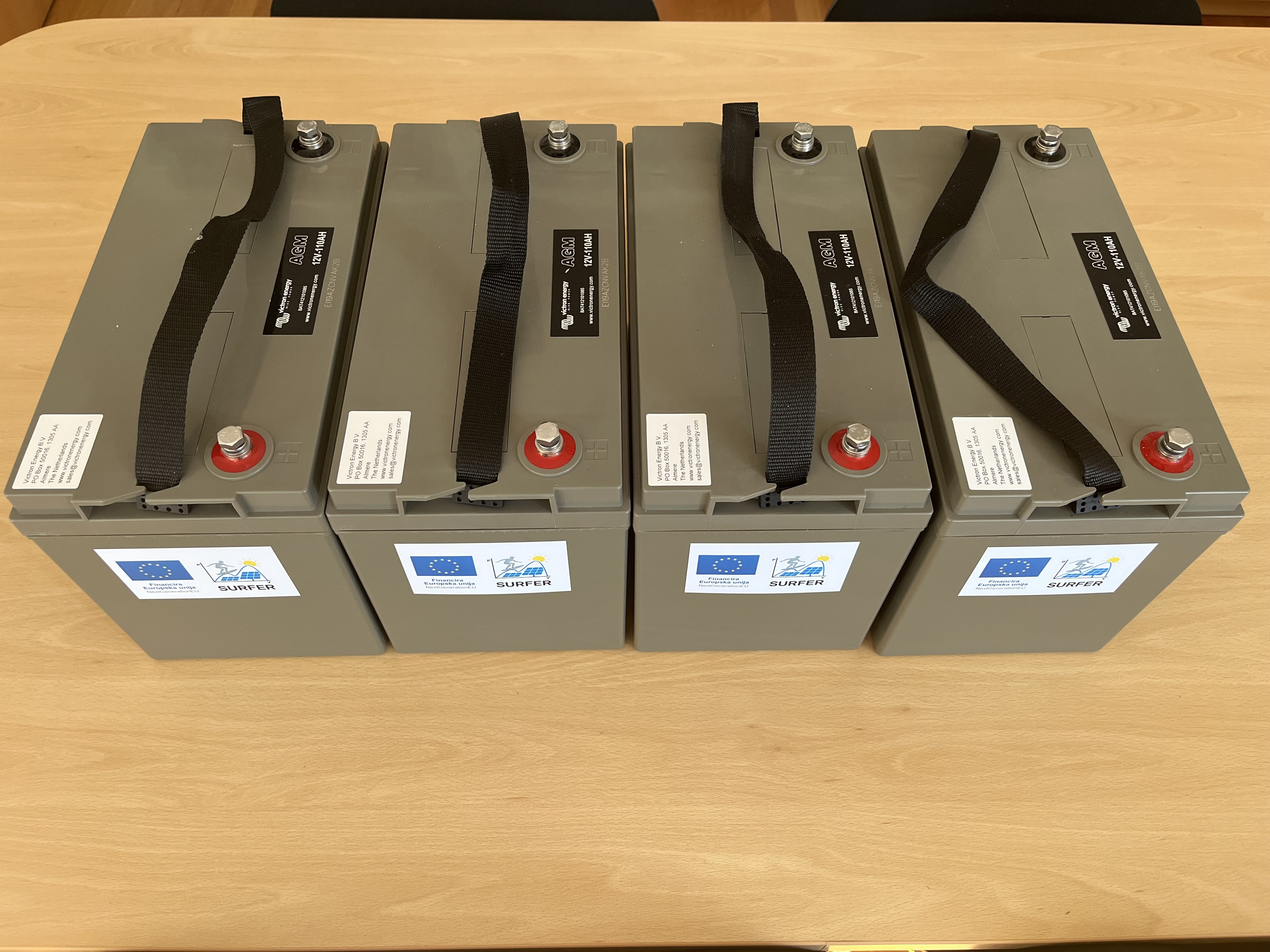
Victron Energy AGM 12 V, 110 Ah battery storage

  • Purpose: The four AGM batteries store electrical energy for use when photovoltaic generation is insufficient to meet current consumption.
  • Capabilities: Connecting two batteries in series provides a nominal voltage of 24 V, suitable for the acquired inverters. The four batteries allow two such battery banks to be formed.
  • Role in the project: The batteries will support research into the relationship between generation, consumption and energy storage, and the behaviour of an off-grid system under changing weather conditions and loads.

A modular setup for different experiments

The equipment allows two experimental systems to be configured and the setup to be adapted to different research tasks. This approach enables configurations to be compared, electrical and environmental quantities to be monitored, and methods for more efficient management of energy generation and use to be developed.

The photovoltaic modules have been installed on the faculty roof. Connection of the remaining components and commissioning of the experimental configurations will follow. All acquired equipment carries the required project visibility labels.
project conference

Ivan Grgić presented a paper at SpliTech 2026

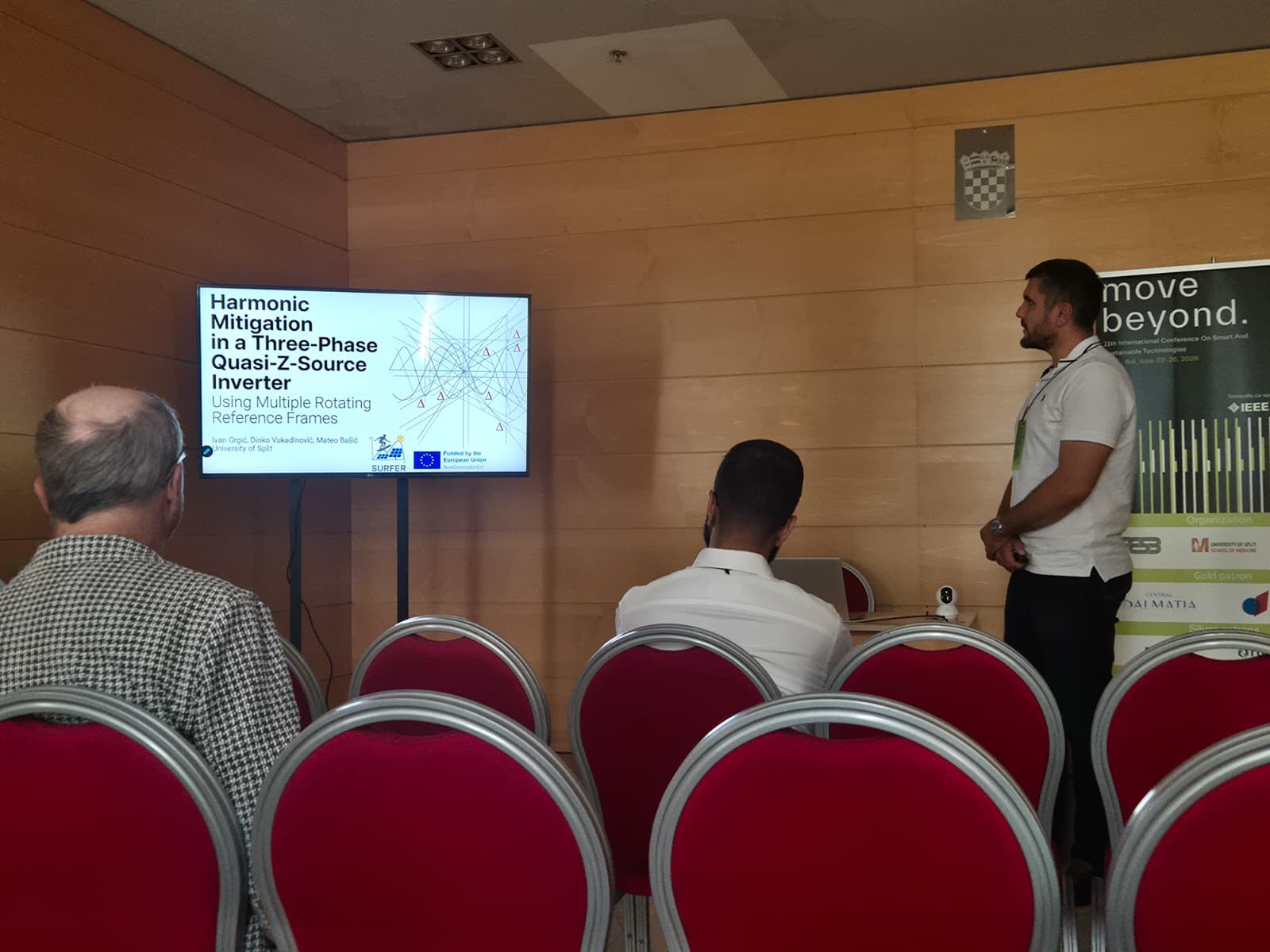
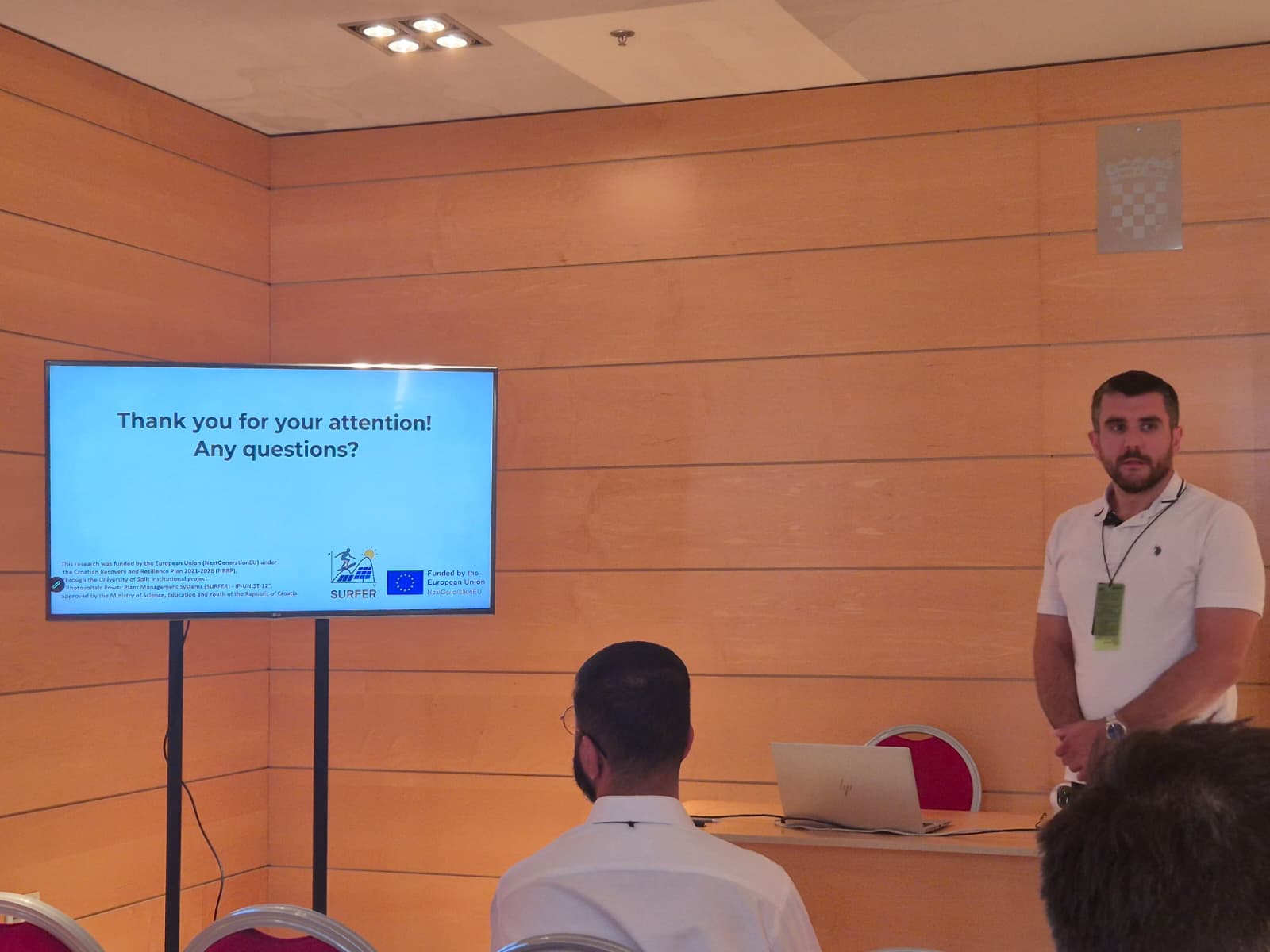
On 25 June 2026, SURFER researcher Ivan Grgić presented the paper “Harmonic Mitigation in a Quasi-Z-Source Inverter Using Multiple Rotating Reference Frames” at the international SpliTech 2026 conference. The paper was co-authored with Dinko Vukadinović and Mateo Bašić.

  • Research focus: A control method was developed for a three-phase quasi-Z-source inverter with a photovoltaic source and battery storage to reduce unwanted harmonic components in the current injected into the electricity grid. Particular attention was paid to the 5th and 7th harmonics.
  • Measurements: Grid voltages and currents, their harmonic content, total current harmonic distortion (THD) and system efficiency were measured at different solar irradiance levels, approximately 200–1000 W/m², and different battery currents.
  • Results: The proposed compensation significantly reduced grid current distortion, especially at lower power levels, with generally a slight increase in system efficiency. Estimates of the 5th and 7th grid voltage harmonics agreed well with the frequency analysis of the measurements.
  • Conclusion: Targeted harmonic compensation improves the current quality of a photovoltaic system. Further reduction of the remaining higher-order harmonics would require higher sampling frequencies and more complex control.

Ivan Grgić at SpliTech 2026 — title slide 1

Ivan Grgić at SpliTech 2026 — acknowledgements slide 1

project conference

Antonio Vuletić presented a paper at SpliTech 2026

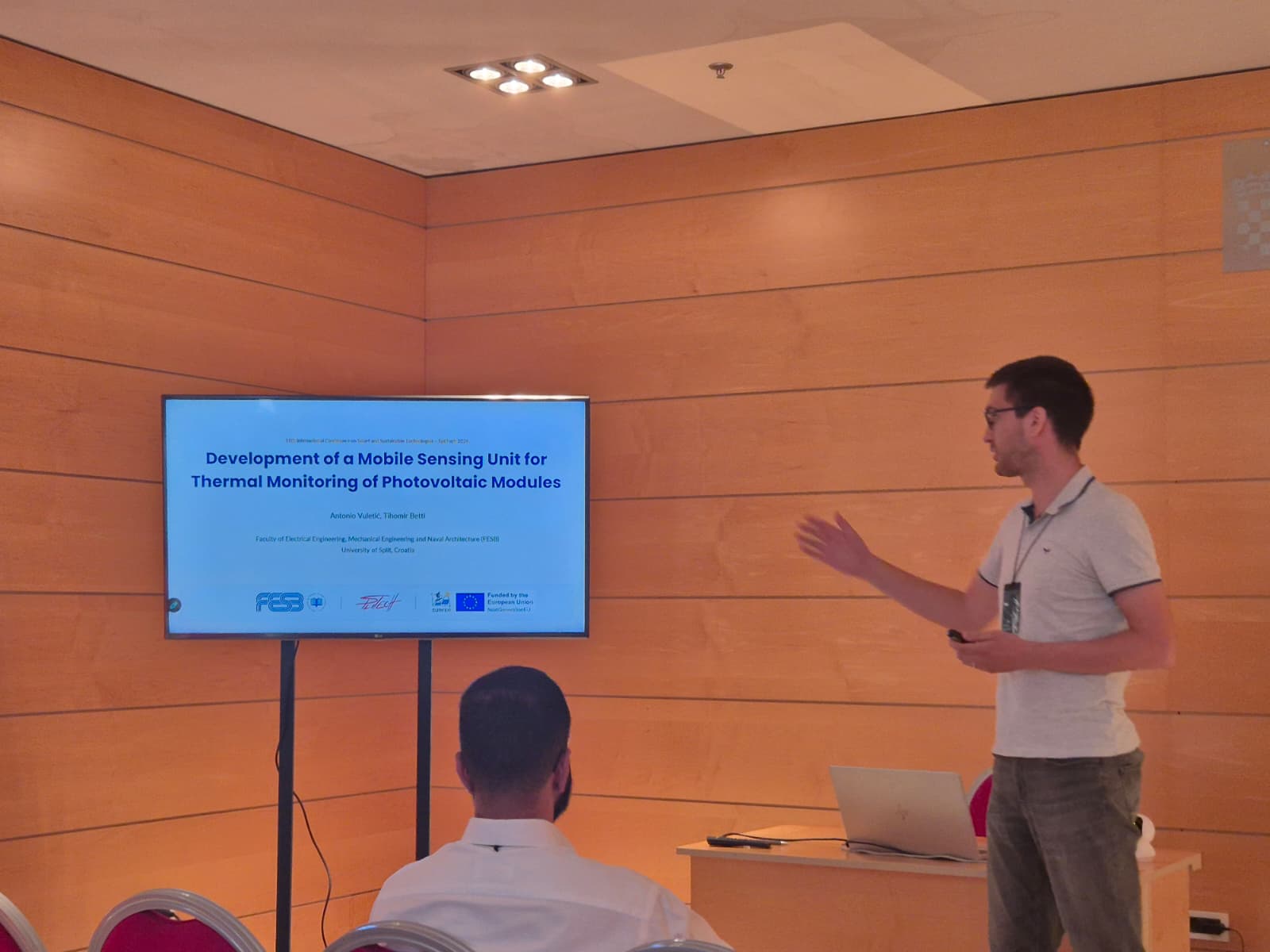
On 25 June 2026, SURFER researcher Antonio Vuletić presented the paper “Development of a Mobile Sensing Unit for Thermal Monitoring of Photovoltaic Modules” at the international SpliTech 2026 conference. The paper was co-authored with Tihomir Betti.

  • Research focus: A mobile sensing unit was developed to monitor the thermal behaviour of a photovoltaic module using multiple temperature sensors and measurements of local weather conditions.
  • Measurements: Temperature was measured at six points on the rear of the module, alongside simultaneous measurements of solar irradiance and wind speed directly beneath it. A microcontroller collected the data and stored them on an SD card.
  • Results: Preliminary measurements showed a consistent temperature difference of approximately 3–7 °C between the parts of the module closer to and farther from the roof surface. Simulink simulations examined how this non-uniform temperature affected the module’s current–voltage characteristic and output power.
  • Conclusion: Under the conditions analysed, the observed temperature differences did not significantly affect electrical characteristics or generation estimates. Measurements at multiple points nevertheless provide more detailed insight into the module’s thermal behaviour.

Antonio Vuletić at SpliTech 2026 — title slide

Antonio Vuletić at SpliTech 2026 — acknowledgements slide

project conference

Ivan Grgić presented a paper at SpliTech 2026

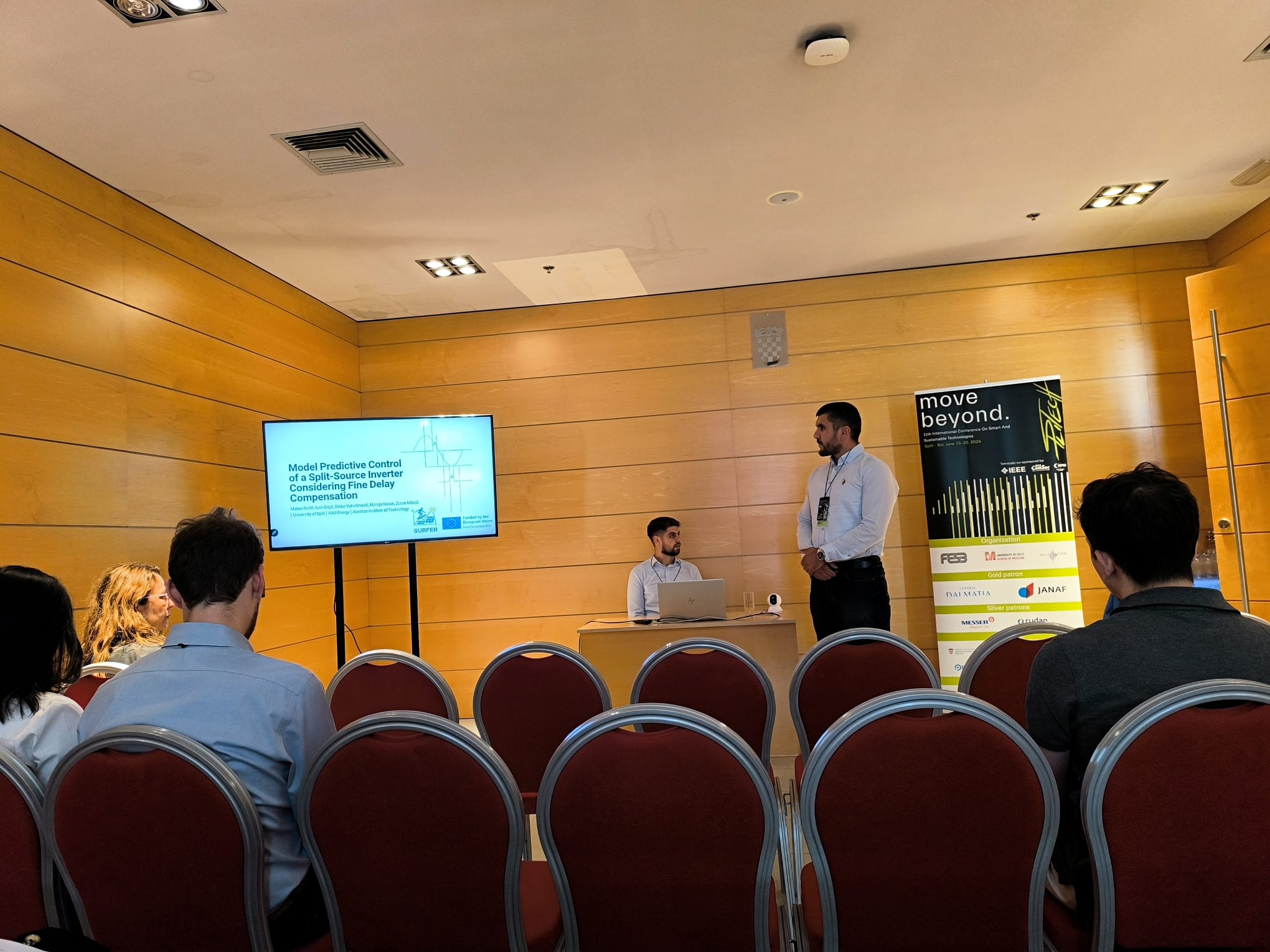
On 24 June 2026, SURFER researcher Ivan Grgić presented the paper “Model Predictive Control of a Split-Source Inverter Considering Fine Delay Compensation” at the international SpliTech 2026 conference. The paper was co-authored with Mateo Bašić, Dinko Vukadinović, Mateja Novak and Zoran Miletić.

  • Research focus: A fine delay compensation method was developed for model predictive control of a split-source inverter (SSI). The method accounts for the actual time between measurement and application of the control decision, which need not equal a full sampling period.
  • Measurements: A laboratory prototype was used to compare operation without compensation, whole-sampling-period compensation and the proposed fine compensation. Input current error and ripple, DC-link voltage ripple, switching frequency, and harmonic distortion of output currents and voltages were monitored.
  • Results: Fine compensation achieved the lowest average input current error and generally better results than the other approaches. Its advantages were particularly pronounced when the delay was approximately half the sampling period.
  • Conclusion: Accounting for delay more precisely improves converter operation, but requires knowledge of its actual value. Further improvement could be achieved by automatically tuning the compensation according to the measured current error.

Ivan Grgić at SpliTech 2026 — title slide 2

Ivan Grgić at SpliTech 2026 — acknowledgements slide 2

project equipment

Three-phase inverter with SiC MOSFETs acquired

The SURFER project has acquired a three-phase inverter with SiC MOSFET transistors for experimental research into power converters and their control algorithms.

  • Purpose: The inverter converts DC electrical energy into three-phase AC energy. Such converters are essential for connecting photovoltaic sources to AC systems.
  • Capabilities: Silicon carbide (SiC) transistors enable fast switching and can reduce switching losses. The equipment enables investigation of how the control method and switching frequency affect efficiency, output voltage and current quality, and converter heating.
  • Role in the project: It will be used to develop and experimentally validate advanced control algorithms, including model predictive control, and to compare different control methods in laboratory setups.

The equipment carries the project visibility labels.
Three-phase inverter with SiC MOSFETs and SURFER project visibility labels

project agreement

SURFER project funding agreement formally awarded

On 4 February 2026, the funding agreement for SURFER – Systems for Managing the Operation of Photovoltaic Power Plants was formally awarded at a ceremony.

The agreement was received by the project’s principal investigator, Associate Professor Duje Čoko, PhD.

Signing of the grant agreement for the SURFER project

project collaboration

Start of project implementation

Project activities have begun.

The next steps include launching the work packages and establishing shared research infrastructure.